The Medtransic HIPAA Compliant Portal
Your credentialing and billing, open to you.
Every payer application, every document we still need, every claim and what it paid. One login, the same view our team works from. Included with every Medtransic client account.
- Price: Included with your service
- Covers: Credentialing, documents, claims, A/R
- Built for: Solo doctors and group practices
- Standard: HIPAA Compliant
The three questions every practice asks its billing company.
Where is my application with Aetna?
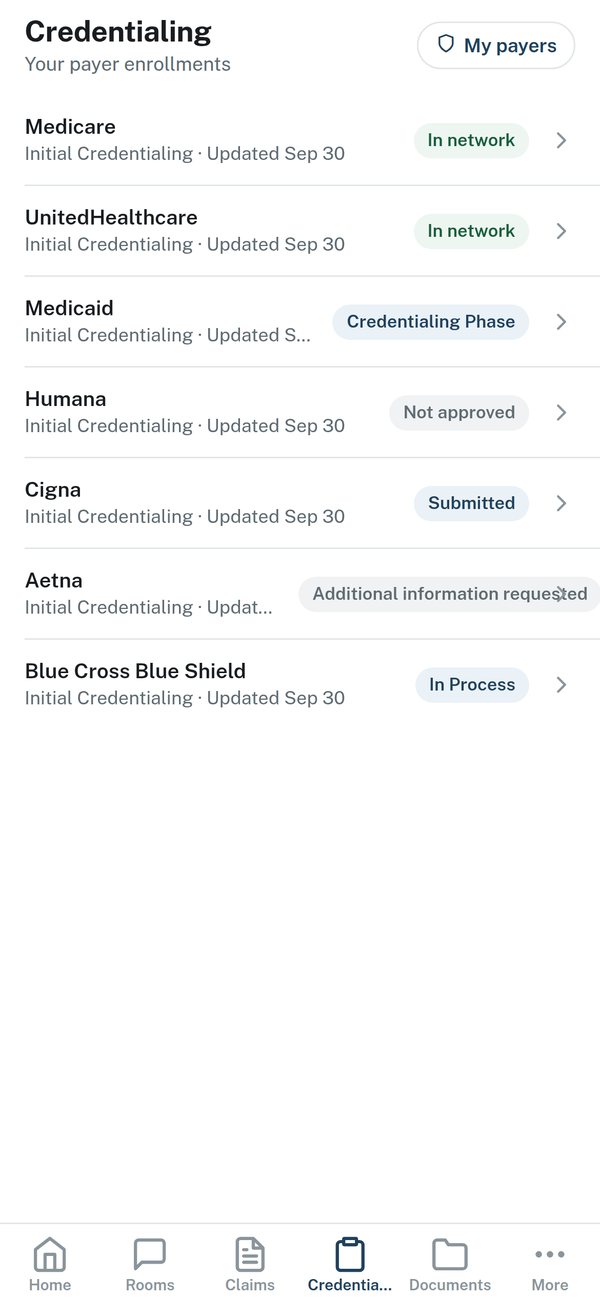
Each payer application shows its stage, its history, and the date you can start seeing that payer's patients.
What do you still need from me?
One list of the documents we're waiting on. Upload once, and it reaches every payer that asked for it.
Did that claim get paid?
Every claim with its stage and amount, the denials we're working, and your receivables by age.
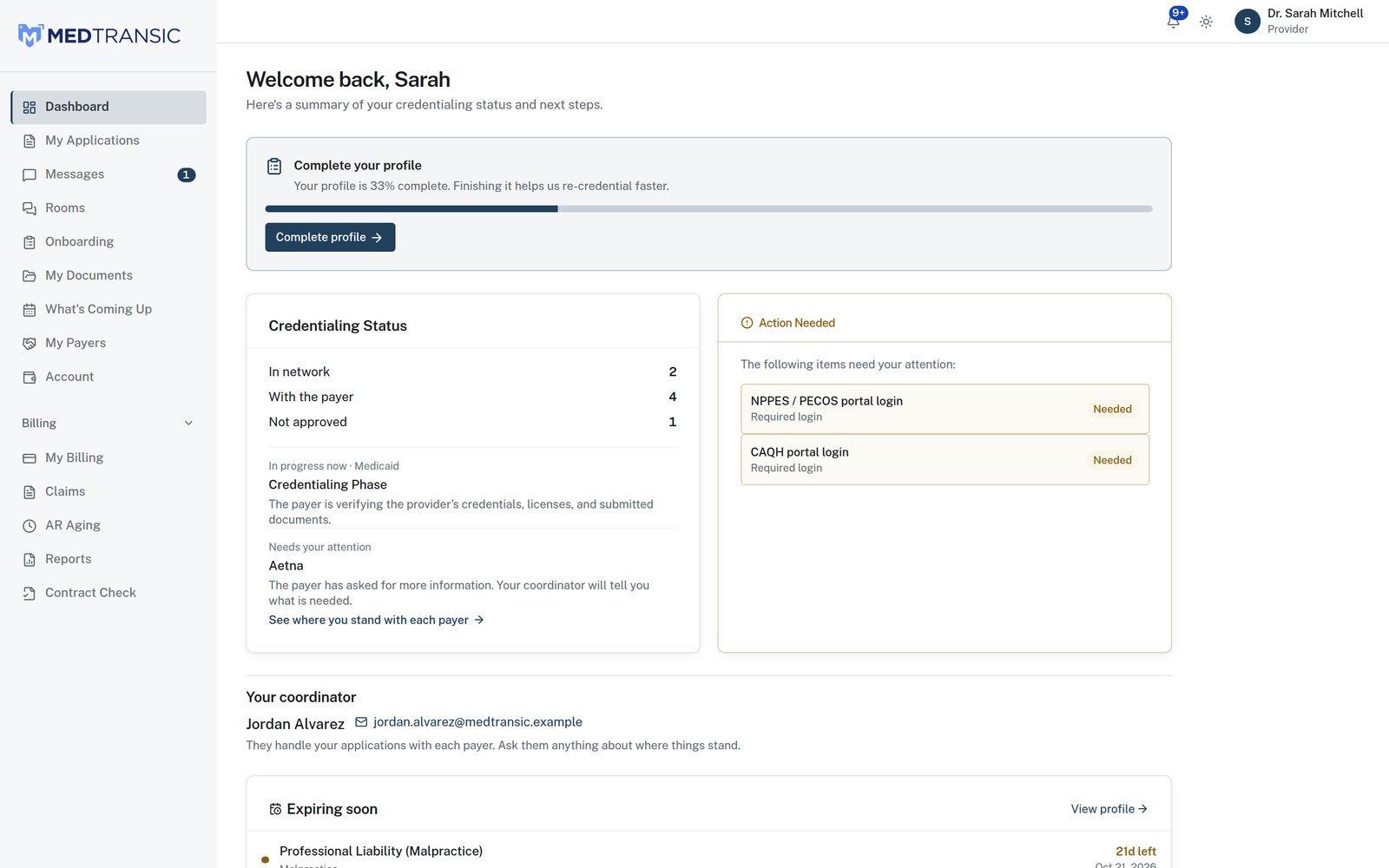
Watch every payer application move.
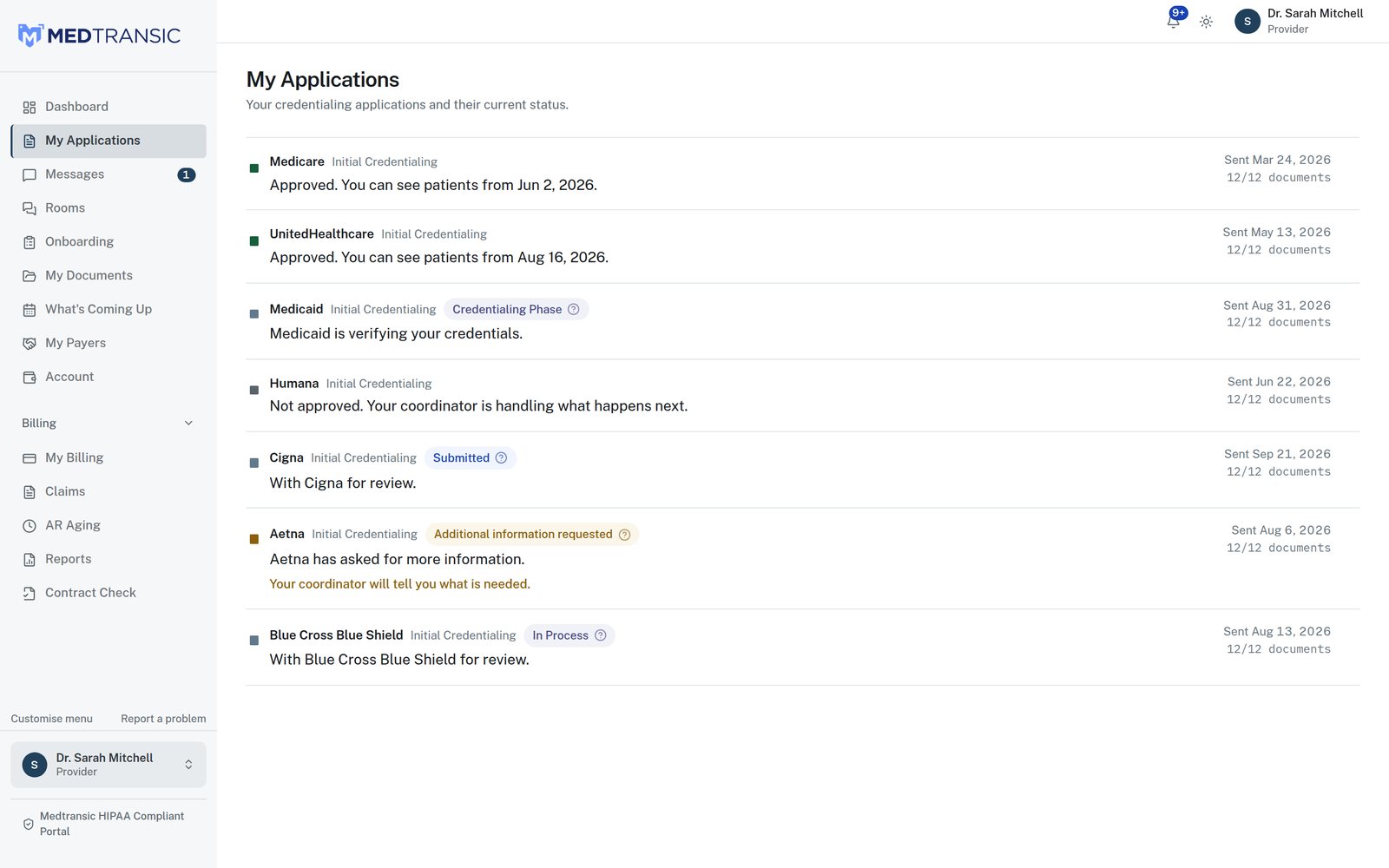
Credentialing is slow, and usually silent. In the portal, each application says where it is in plain words: with the payer, waiting on more information, approved, or not approved and what we're doing about it.
- Stage and full history for every payer
- Your in-network date as soon as it's approved
- Re-credentialing and CAQH re-attestation tracked for you
One list of what we need. Nothing lost in email.
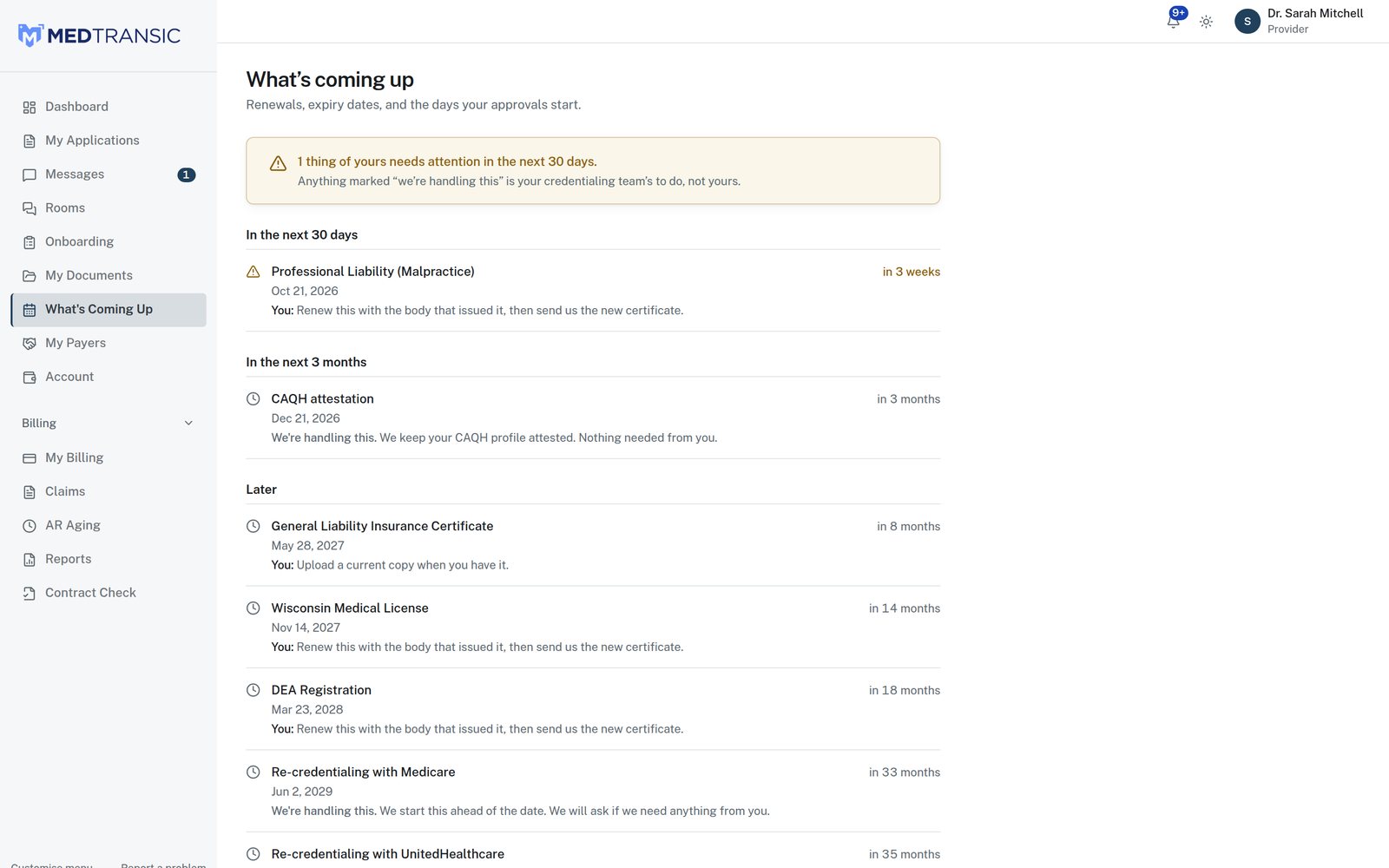
Payers each keep their own checklist. The portal merges them into one, so you see a single "NPI letter needed" instead of seven. Licenses, DEA, malpractice and board certification are tracked with their expiry dates, and you're reminded before anything lapses.
- Upload once, delivered to every payer that asked
- Reminders before a credential expires
- PDF, photo or scan, from your desk or your phone
Your claims and A/R, whenever you want to look.
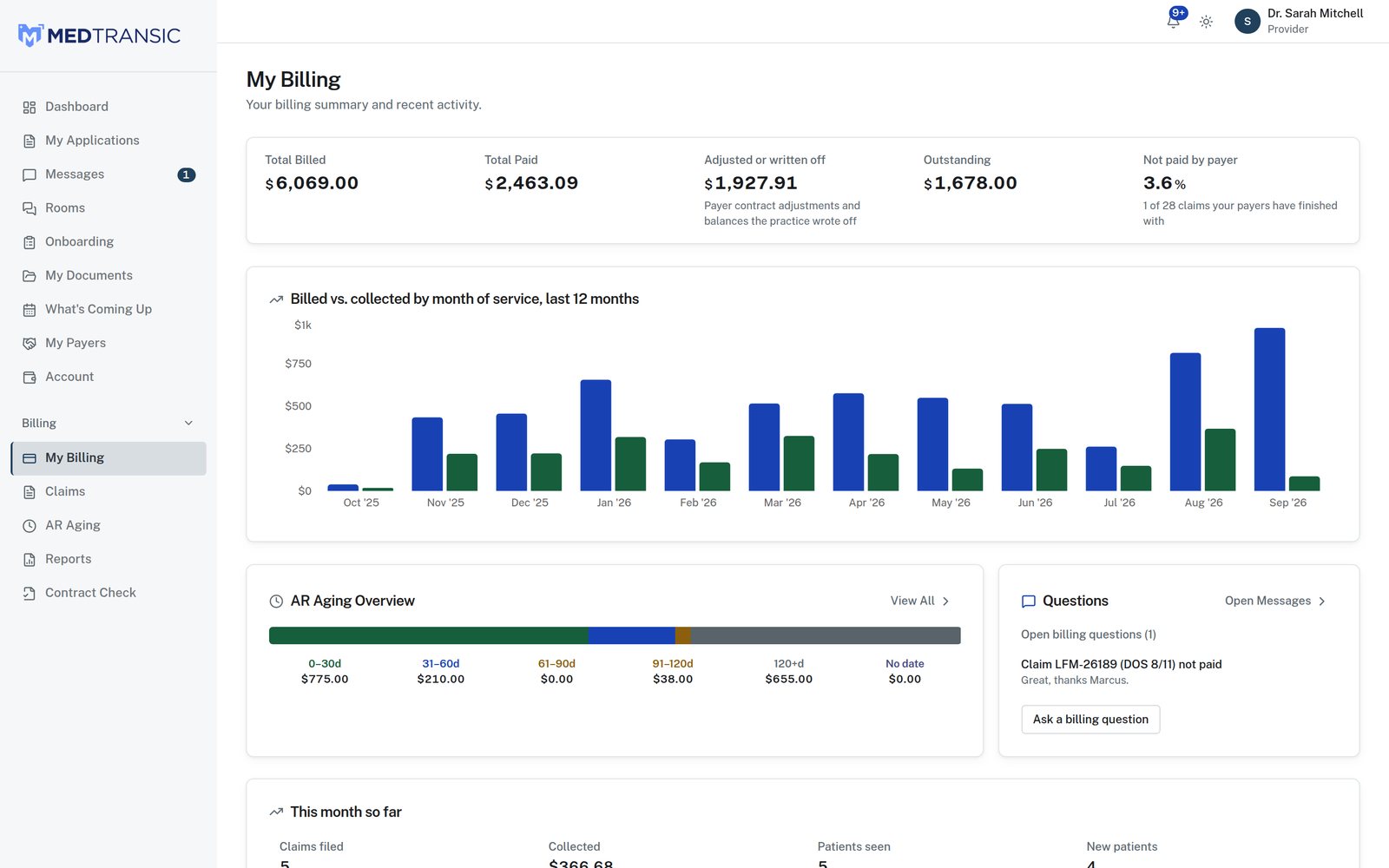
See what was billed, what was paid, what was adjusted, and what is still outstanding. Receivables are broken out by age, and every claim carries its current stage, so checking on your money never needs a phone call.
- Billed against collected, month by month
- A/R aging on demand
- Denials and disputes tracked to a result
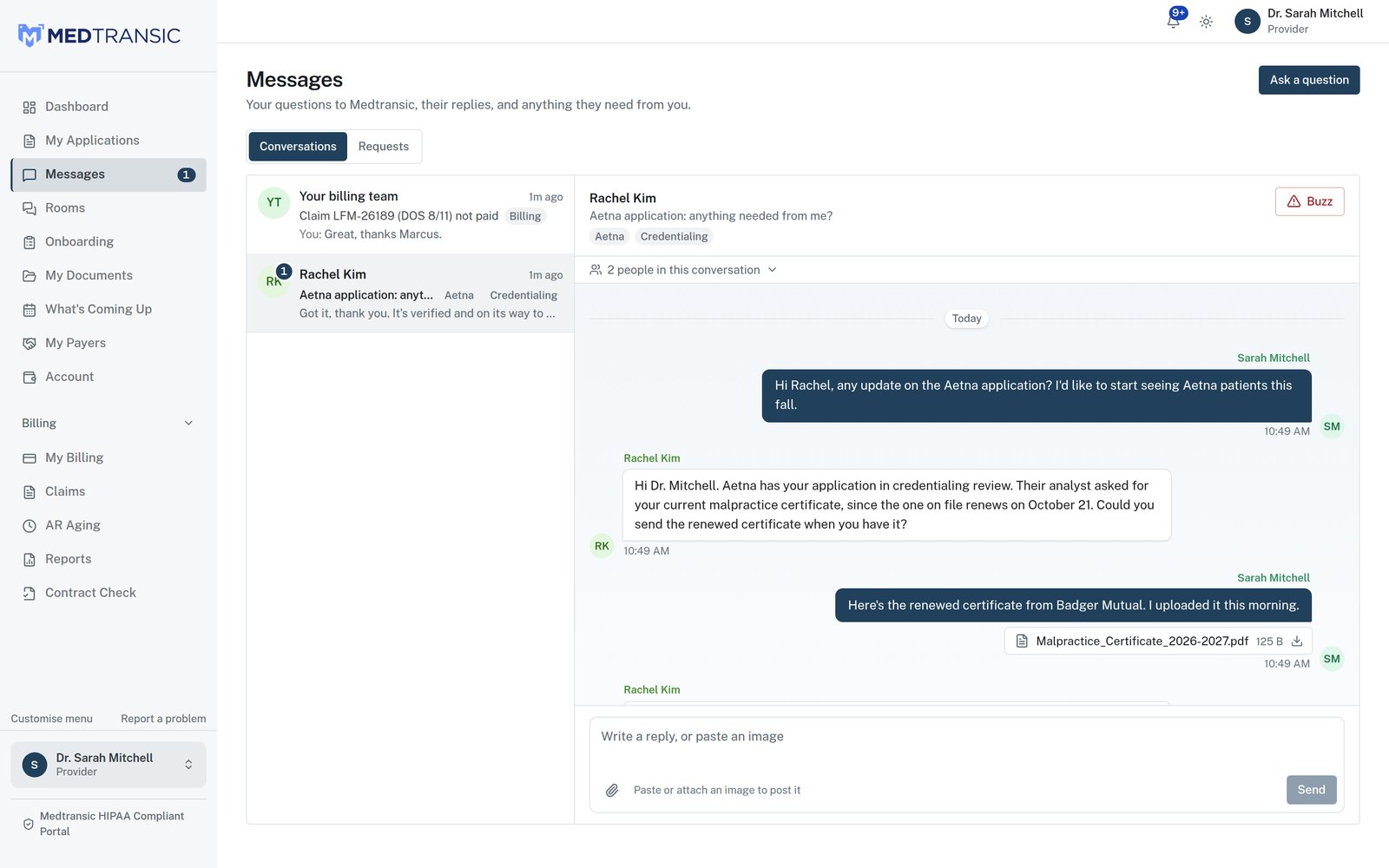
Ask a question. Get an answer from the person doing the work.
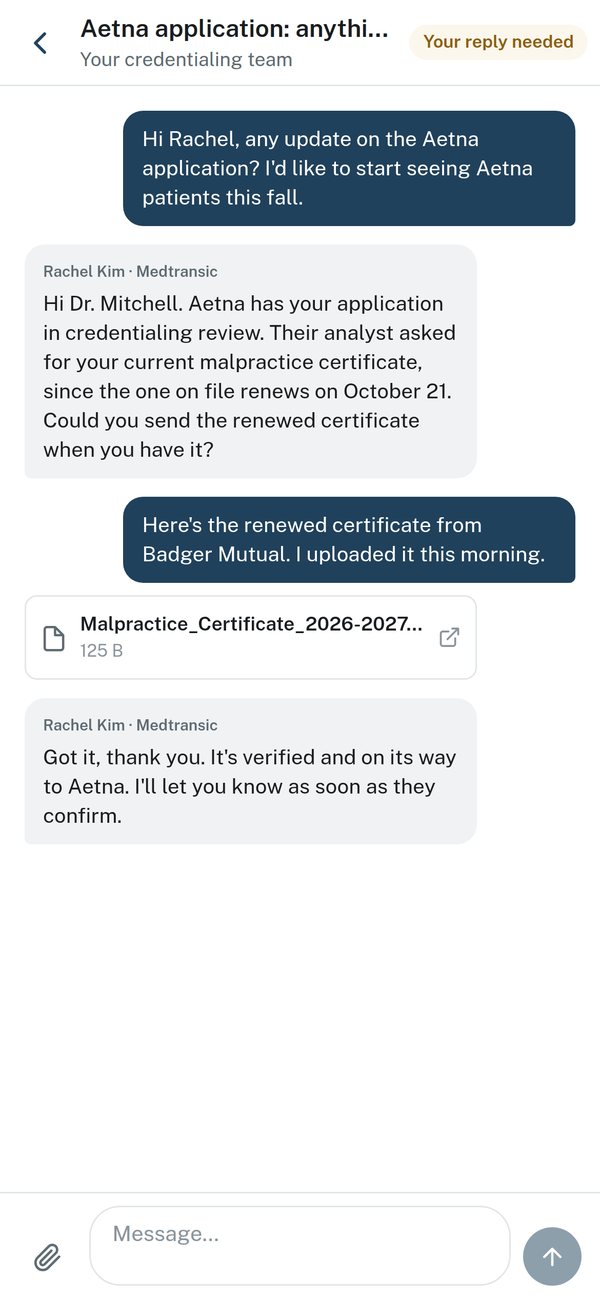
Messages go straight to your credentialing coordinator or billing team, tagged to the payer or claim they're about. Attach a document right in the conversation, and the whole history stays in one place for everyone who needs it.
- Credentialing and billing questions, routed to the right team
- Attachments in the conversation
- A clear record of what was asked and answered
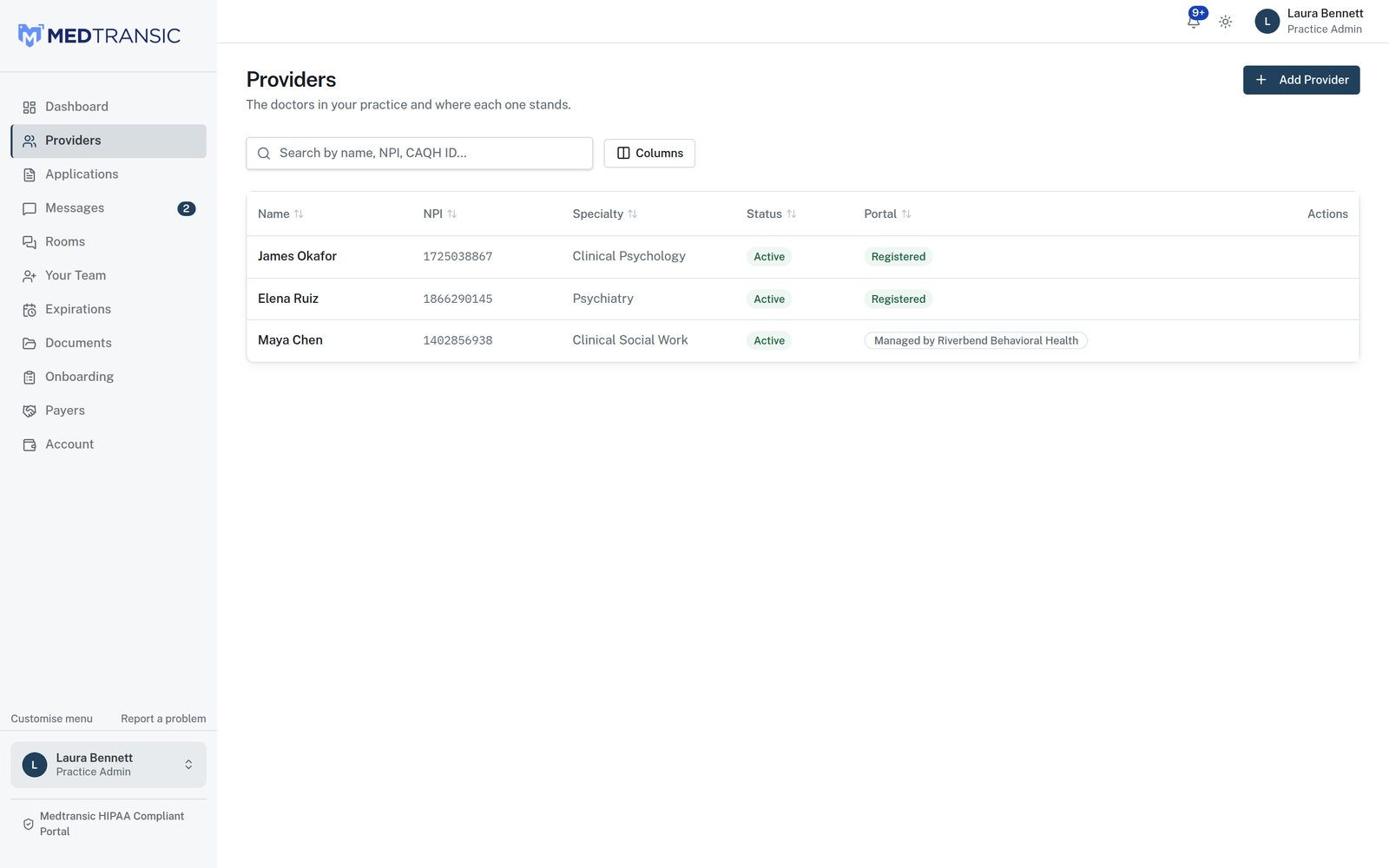
Every provider in your practice, in one view.
Practice owners see every provider under the practice, their applications and their documents. Each provider can sign in on their own, or the practice can manage them centrally. You decide what each member of your team can see.
Managed or self-serve
Let each doctor log in, or run their account for them. Switch at any time.
Your team, your rules
Choose who sees credentialing, who sees billing, and who sees neither.
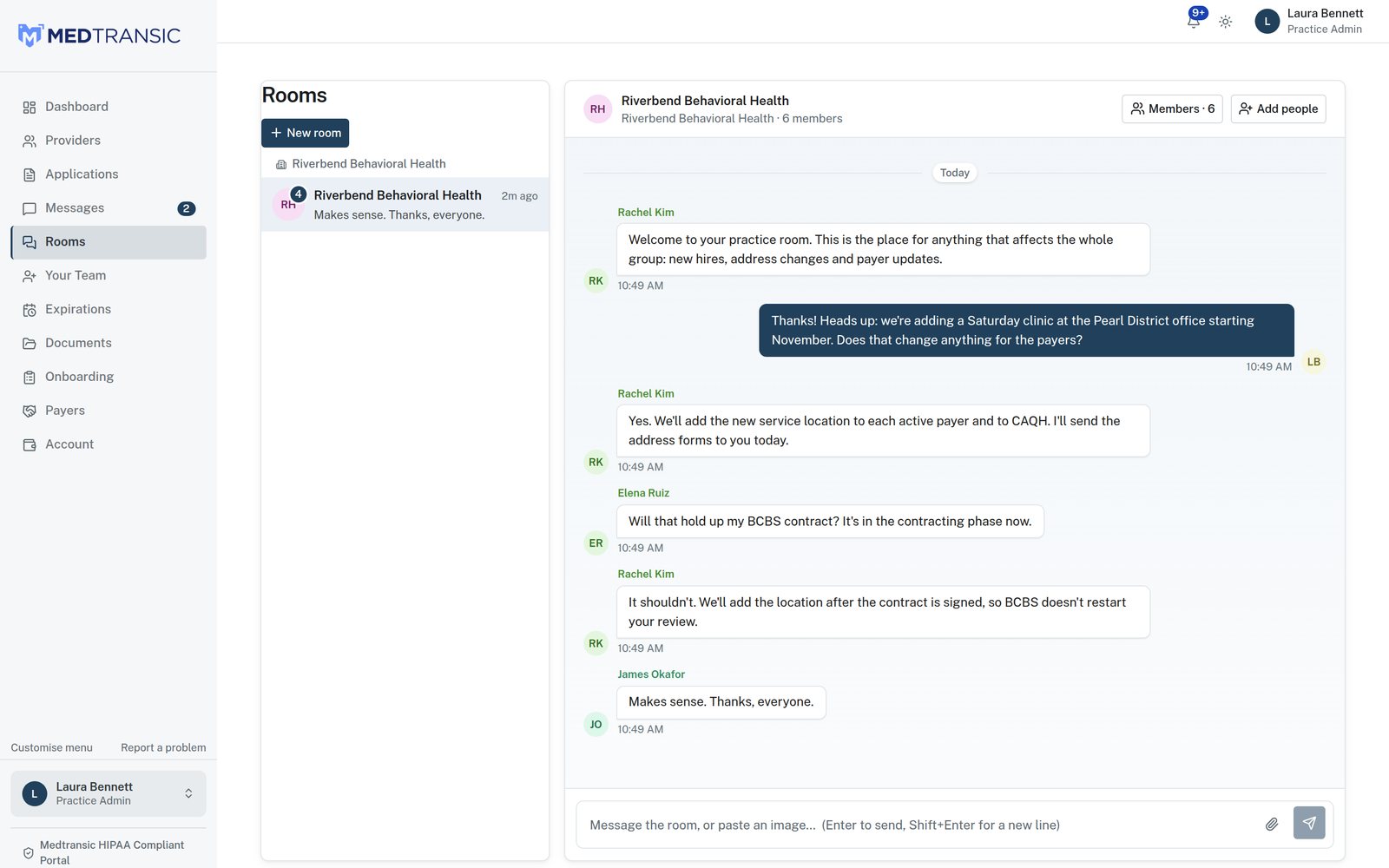
A room for your practice
A shared space for your staff, your providers and your Medtransic team.
iPhone and Android apps · coming soon
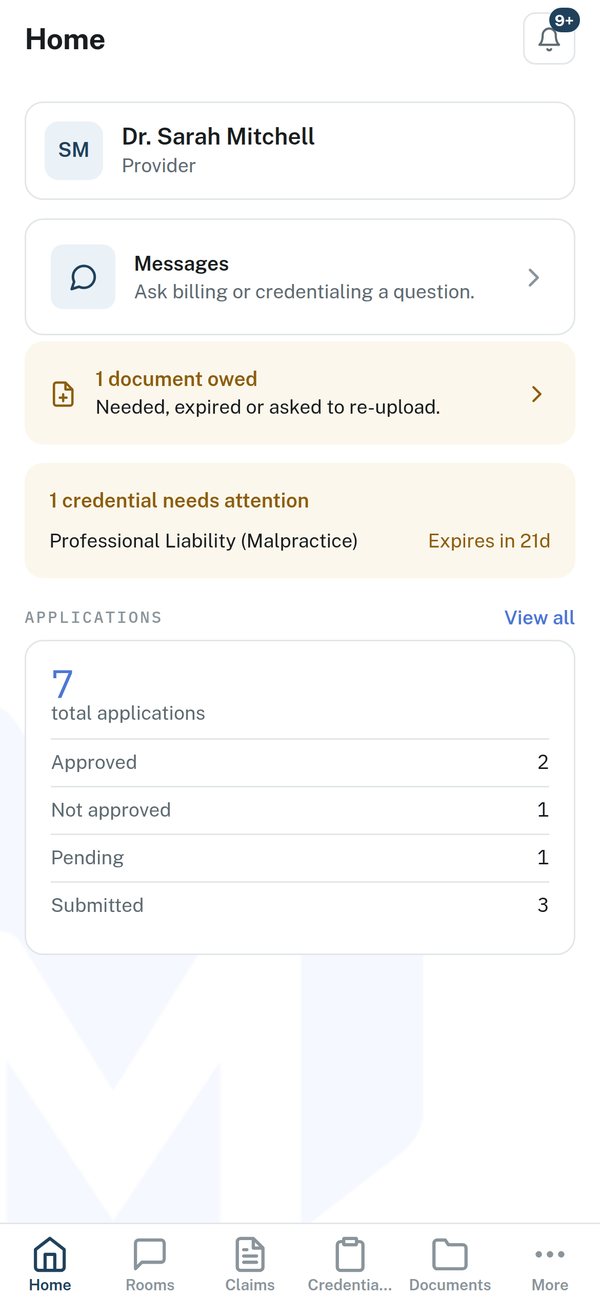
On your phone, between patients.
The portal works in any phone browser today. Native apps for iPhone and Android are on the way, with your applications, documents, claims and messages in your pocket, and a camera upload for the document we just asked for.
HIPAA Compliant, and built that way from the start.
HIPAA Compliant
Hosted on Amazon Web Services under a signed Business Associate Agreement.
Your practice only
Each doctor and practice sees its own information and nothing else.
Two-factor sign-in
Every Medtransic staff account is protected by two-factor authentication.
Encrypted documents
Files travel over HTTPS and are stored encrypted.
How you get your login.
Talk to us
Book a call. We'll look at your credentialing and billing and tell you plainly what we'd take on.
We onboard you
We set up your practice and providers, then send each person their invitation.
Sign in and follow along
From day one, you see the same applications, documents and claims our team is working.
Common questions
What does the portal cost?
Nothing extra. Portal access comes with every Medtransic credentialing and billing client account.
Does it replace my practice management system or EHR?
No. Your practice management system runs your practice. The portal shows you what we're doing with your credentialing and your claims.
How current is the information?
It's the same record our team works from. When your coordinator moves an application or a claim, you see it.
We're a group. Does it work for several providers?
Yes. Every provider sits under your practice. Each can have their own login or be managed by the practice, and you control what your staff can see.
Can I use it on my phone?
Yes, in any phone browser today. Native iPhone and Android apps are coming soon.
See where everything stands, without having to ask.
Book a call, and we'll show you the portal with your own situation in mind.
Book a call (888) 777-0860
Screenshots show sample data, not real patients or providers.